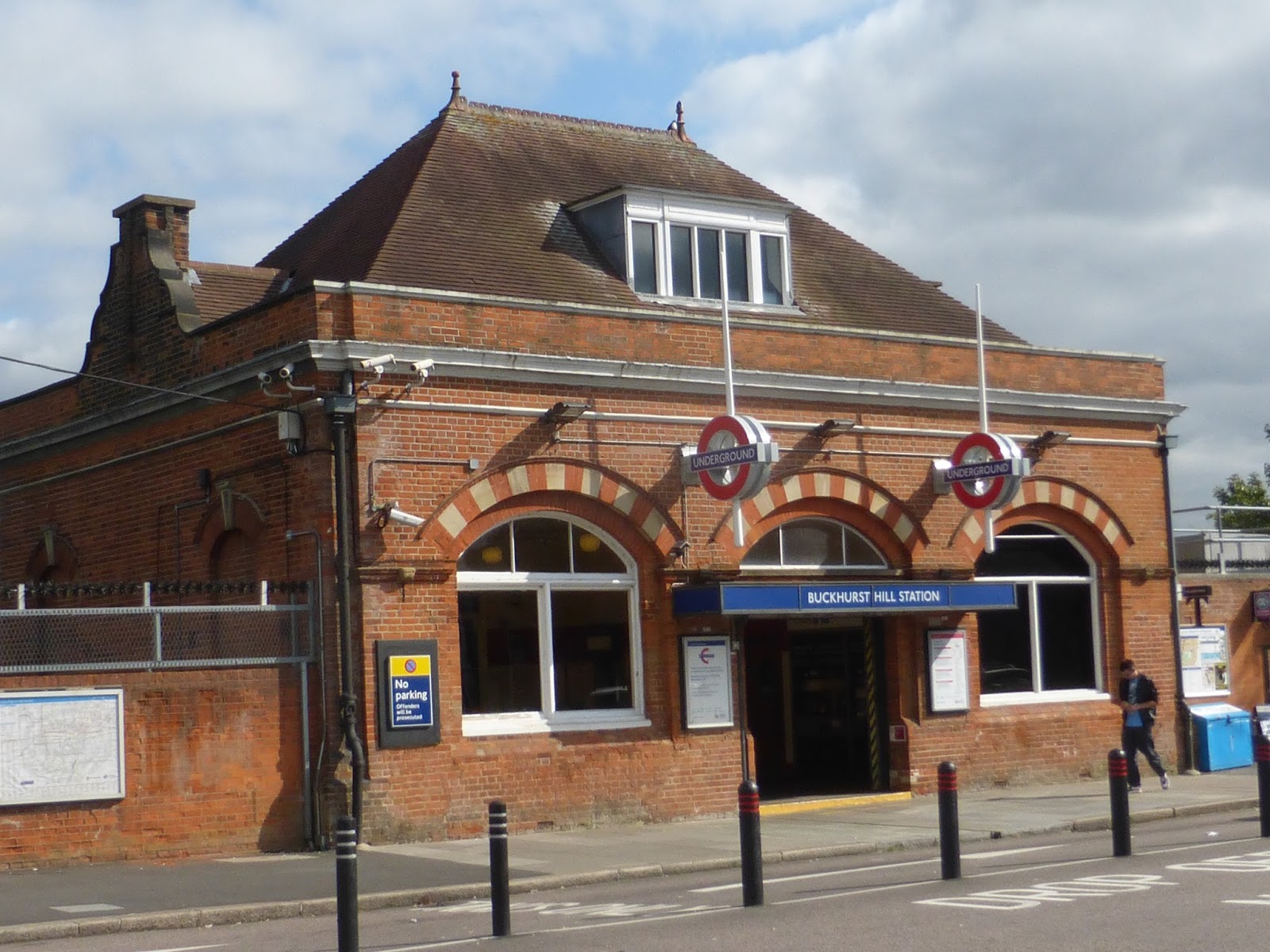
This is the fourth station I have visited on the Central line. This line is the longest, fastest and busiest on the network. The original station was opened in 1856 and became the terminus of the branch from London. However that station was in a completely different place on the High Street near the Lopping Hall. In 1865 it was resited to its present location as part of the extension of the line to Epping and Ongar. In 1948 London Underground took over the service from British Railways.
The present station was built in 1940 in readiness for the Underground trains
The canopies above the platforms are very elegant and differ from other underground stations. This station was designed by a Scottish architect, James Murray Easton.


The design of the ticket hall also has an art deco feel although it wasn't completed until 1940, the design definitely has a pre war feel to it with its arched window of glass bricks.
This is the Lopping Hall. It was built in 1884 with money from the Corporation of London as recompense for the town losing lopping rights in Epping Forest. (Cutting branches off the trees).
The detail above the door is a terracotta relief of the loppers at work. The wood was taken as fuel for domestic use

This is a view of the hall from the other side and below you can see some of the original tiling from the entrance.

Close to the Hall is Nando's which was once a 1920s car showroom. The circular layout inside the restaurant follows the curved frontage. Unfortunately I haven't got a photo of the inside where they have used metal from reclaimed car body panels for the table tops.
Next to Nando's is St Mary's church. Built in 1872 it is unusual for its lack of a tower.
A church hall was added in 1924 and then modernised in 2004,
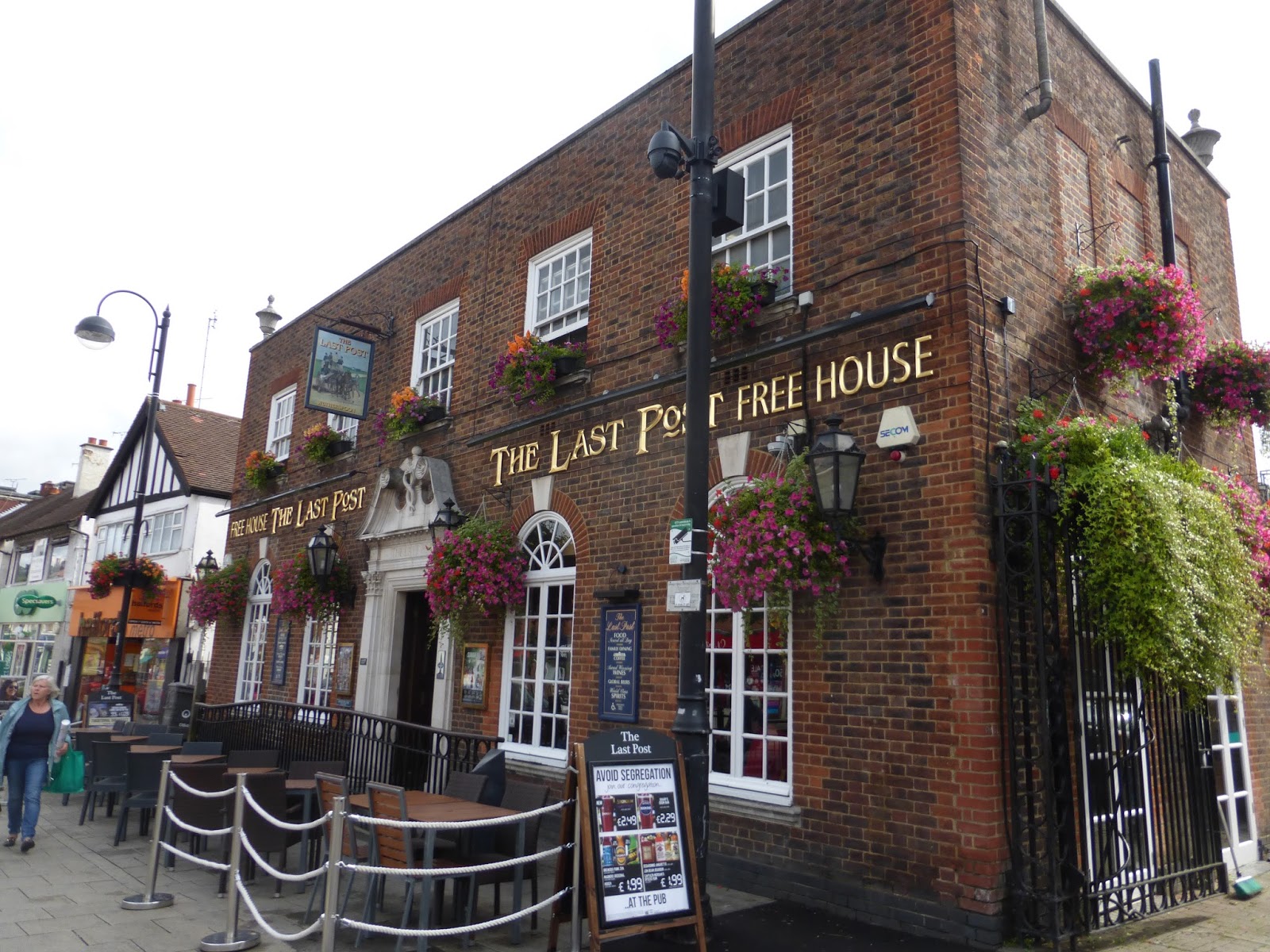
This building on the High Street used to be the central post office, set up between the wars as the town became more populated and developed. It became a pub in 1993.
Towards the end of the High Street is Loughton Cricket Club which was founded in 1879. Notice the thatched club house.
Just opposite the Cricket Ground is the war memorial erected after the first World War in 1920.
The local library is usually where
I start my research as they will always have books on local history and very helpful staff.
This is School Green overlooked by these attractive 200 year old, white painted cottages.
Staples Road School dates back to the 1880s and comprised of an infant school, boys' school and girls' school. During WW2 the undercroft was used as a casualty clearing station.
It is still used as a primary school today with infants in one building and the juniors in another. Across the road from the school is Epping Forest.
Walking along the road you pass the 'four sisters'. These are Victorian houses named Edith, Ellen, Louisa and Clara Villas.
On the same road as the school is Forest Villa, built in 1882 for the Rev Dr Robert Hunter. He was interested in astronomy which is why the roof has that unusual extension. He also wrote a 14 volume Encyclopaedic Dictionary which took 17 years to complete.

This house is the old Shaftesbury Retreat. Built in 1877, a man called John Dean used to provide refreshments here for day trippers from

Round the corner from this house there is a 1970s development known as the Shaftesbury Estate. It was here that the Ragged School Union bought 3 large barns and converted them into a reception centre for the poor children from the London slums. From 1894 to 1939 every Spring and Summer a thousand or so children would alight at the station from special trains and walk to the Retreat for a day in Epping Forest. On arrival they were given a meal and then taken to play in the forest opposite. After tea they would be walked back to the station to go home. For the majority it would have been their only holiday. However from 1913 to 1939 the old National school was used as accommodation for those able to stay longer.

Across the road from the Shaftesbury Estate is Epping Forest
This is the Victoria Tavern which dates from the 1870s. It was run as a beerhouse and tea garden from 1882 to 1907. The gardens were much larger than they are now.

They were used by visiting circuses and for other entertainment for the thousands of visitors who came to Loughton by train from London to visit the forest.
This house is known as the Headmaster's House. In 1846 the British School run by nonconformists was built alongside the Headmaster's house. Note the bricked up window. This was done to avoid paying window tax (abolished in 1851).
These houses were the traditional Essex labourer's cottage made from timber and weatherboarded and tarred. They were common in the 18th and 19th century and when built would have cost approx £12.

This cottage is still tarred.
This drinking fountain was restored in 2004 replacing a Victorian one which was demolished by a bus in 1934
Back at the station I noticed this thought for the day on the board.


 The station continues to change as on the day I visited it was the last day that you could buy a ticket from a staffed ticket office, from now on it will have to be done by card. It wasn't made clear though if a member of staff would be on hand if there was a problem with the barriers recognising your ticket!