This is the first of my posts about 'Above the Underground' I am starting with the Bakerloo Line which travels from the Elephant & Castle in South East London to Harrow & Wealdstone in North West London.

( Wikipedia)
The Bakerloo line has 25 stations of which 15 are at a deep level underground. The name comes from the amalgamation of the words Baker and Waterloo which are stations on this line and it is the brown coloured line on the tube map. It carries over 110 million passengers per year.


You emerge from the station onto a huge roundabout. Subways take you from one side to the other with 5 different exits. Lots of people prefer to cross the road rather than descending to the dark subways not knowing who you might meet.


Opposite the shopping centre is the Metropolitan Tabernacle church. It is an independent Baptist church built in the late 19th C. Although the outside is a wonderful classical piece of architecture that isn't the case inside which was destroyed by fire in the 1890s and again during WW2 and was last rebuilt in the 1950s.
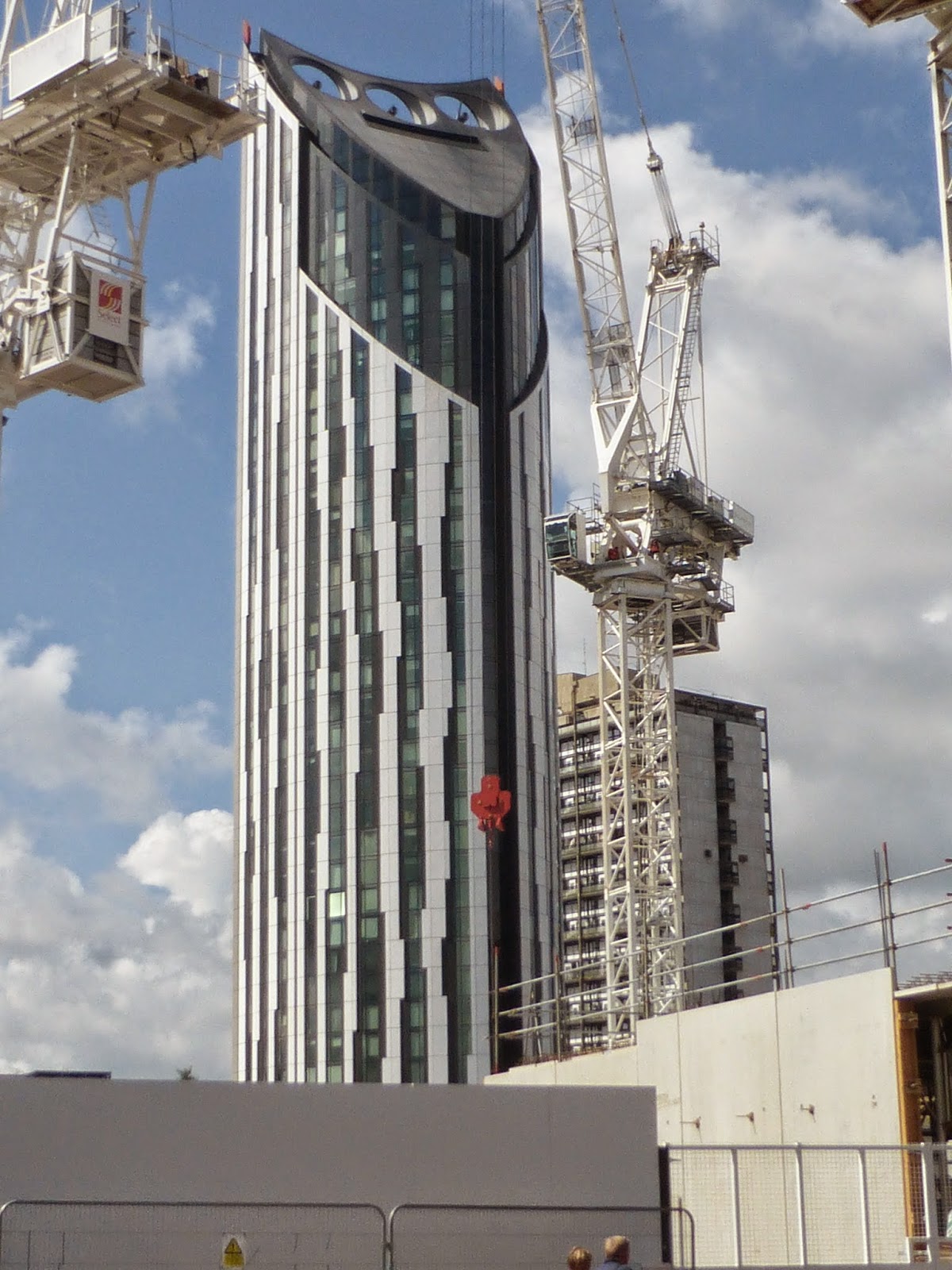 Walking past the shopping centre and down Walworth road you see a familiar building from the London skyline. It is the Strata building with its distinctive three wind turbines built into the top of the building. It is a residential tower block of 43 floors.


Continuing along the Walworth road you pass the old Walworth town hall which housed the Cuming Museum. Unfortunately a fire in March 2013 meant that it had to close whilst repairs were carried out. It is hoped that the Museum will reopen in the not too distant future.


These are the railway arches beneath the main rail line which are used as shops and restaurants.
 This is St Mary's Churchyard on Newington Butts which reopened as a park in 2008. A new leisure centre is currently being built alongside the park.


Behind the Tabernacle Church on St George's Street is the University of the Arts


 There are a number of these tiny parks around London. They are full of greenery and always have seats. They are part of the Mayor's idea to provide as many green places as possible for people to get away from the hustle and bustle of the city and relax in a green haven.
 West Square just off St George's Road built in the late 18th C. The houses are four storied buildings. Charlie Chaplin lived here briefly as a boy and now being close to Westminster it is home to a number of politicians.


 and on to The Imperial War Museum. This building was originally 'Bethlem Royal Hospital' a hospital for people with mental illnesses informally known as Bedlam. The meaning of the word bedlam (a scene of uproar and confusion) is derived from the hospital's nickname. The hospital moved to West Wickham in the Borough of Bromley in 1930 and the Imperial War Museum moved here in 1936.
The first baby born on the Underground was in 1924 on the Bakerloo line at the Elephant & Castle.
( Wikipedia)
The Bakerloo line has 25 stations of which 15 are at a deep level underground. The name comes from the amalgamation of the words Baker and Waterloo which are stations on this line and it is the brown coloured line on the tube map. It carries over 110 million passengers per year.
The first station on the line going from South to North is The Elephant & Castle and to reach the street level you need to either take a lift or climb the steep, spiral staircase as there are no escalators at this station. The building above the station is used by London Underground for administration.
You emerge from the station onto a huge roundabout. Subways take you from one side to the other with 5 different exits. Lots of people prefer to cross the road rather than descending to the dark subways not knowing who you might meet.
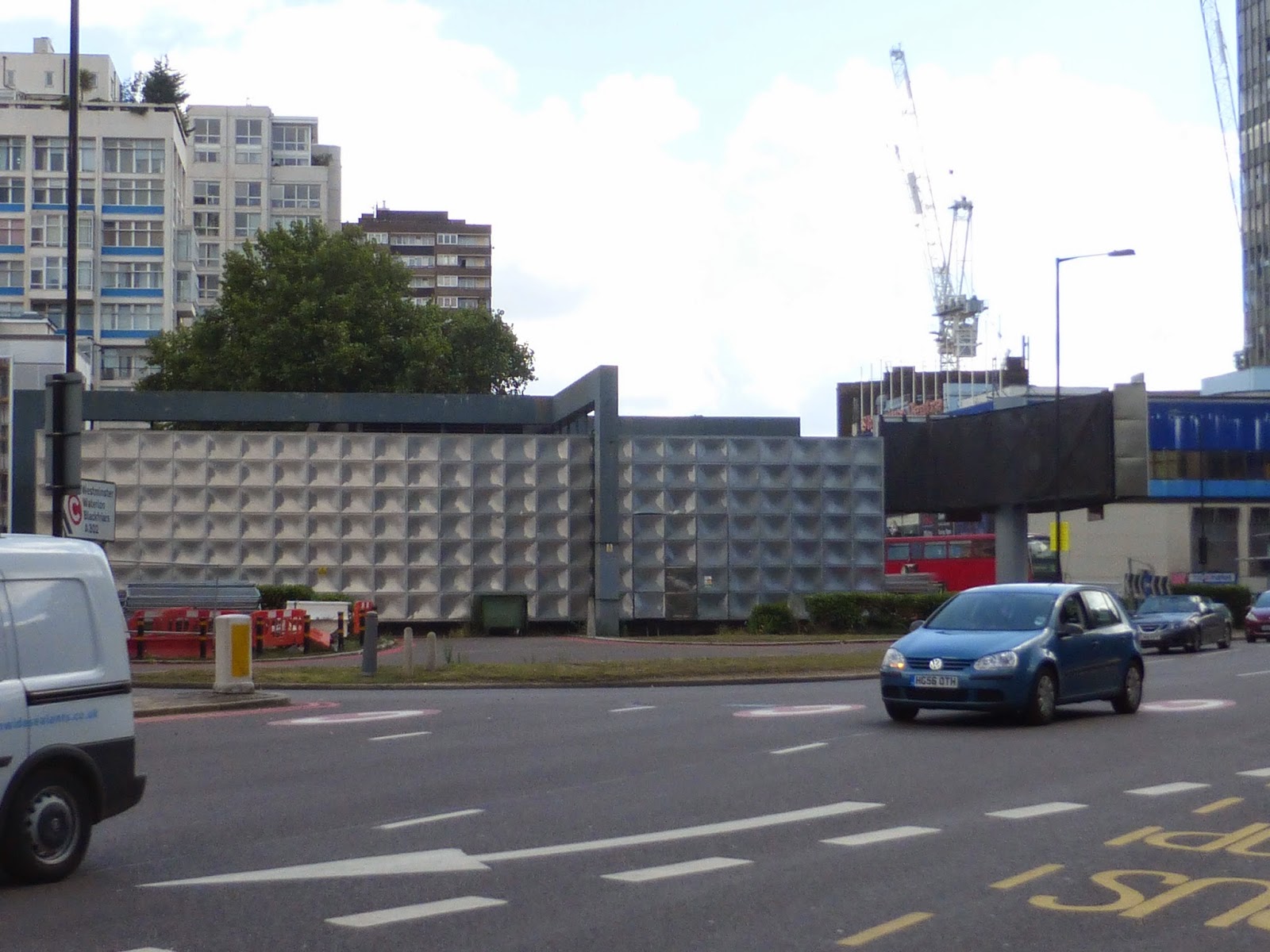
The structure in the centre of the roundabout is a memorial to the scientist Michael Faraday (born nearby in 1791) which lights up during the hours of darkness. The box shaped structure hides the electrical substation for the Underground.
Diagonally opposite the Underground station is the shopping centre, a dismal place but should soon undergo a major refurbishment. Much of the surrounding area has changed under a regeneration program. The 60s built concrete flats have nearly all been demolished with the promise of new apartments taking their place.
Opposite the shopping centre is the Metropolitan Tabernacle church. It is an independent Baptist church built in the late 19th C. Although the outside is a wonderful classical piece of architecture that isn't the case inside which was destroyed by fire in the 1890s and again during WW2 and was last rebuilt in the 1950s.
(Aug 2014)
Continuing along the Walworth road you pass the old Walworth town hall which housed the Cuming Museum. Unfortunately a fire in March 2013 meant that it had to close whilst repairs were carried out. It is hoped that the Museum will reopen in the not too distant future.
A couple of minutes walk from the Museum is East Street Market. This market is one of the oldest in London and has officially been running since 1880. However there has been street trading going on in Walworth since the 16thC
On the corner of East Street and Walworth Road is a blue plaque commemorating the silent movie comic, Charlie Chaplin who was born in Walworth.
These are the railway arches beneath the main rail line which are used as shops and restaurants.
Behind the Tabernacle Church on St George's Street is the University of the Arts
Further along St George's Road is Geraldine Mary Harmsworth Park which leads you to the Tibetan Peace Garden
The first baby born on the Underground was in 1924 on the Bakerloo line at the Elephant & Castle.


