Not deterred by a rail strike I set off in search of the 29th station on the Metropolitan line. Not only did I want to cross off this out of London station (I'm no longer in Greater London but in the county of Hertfordshire) but I also wanted to meet up with a friend who lives here. Many trains were cancelled due to the strike but I was able to get one to London Victoria instead of London Bridge or Charing Cross. It was going to be a long journey anyway so a few extra minutes wouldn't make any difference. My friend, L, had done some research before I arrived and had decided which route to take that would show me the best of Watford. I am pleased to say there was lots to see and enjoy especially in the company of a friend who has lived here most of her life.

The station has two platforms and is served only by the Metropolitan Line. The station opened in 1925 with electric trains to Baker street and steam trains to Marylebone. The station is approximately one mile from the centre of Watford Town and an extension was planned to take the line into the centre but this never materialised. Compared with other stations, this one, along with Moor park and Croxley are some of the least used stations on the Underground system. In 1921 only 0.96 million people used the station although numbers are down post Covid. In 2019 there were 1.92 m passengers. However compared to a Central London Metropolitan station such as Baker Street which had 28.07m in 2019 and 11.15 m in 2021, there is a big difference.
A small waiting room on the platform but I'm glad I had a peep inside because there on the wall was the Labyrinth.
This one is 8/270
You can see from this map of the Metropolitan Line that Watford is at the end of a short branch line leaving me with just five more stations to visit.
The station is very similar in style to the previous station at Croxley.
Next to the station is Watford Grammar School for boys. This is a selective school but not a private school. In other words if you are clever enough to pass the 11+ exam and you are a boy, you might have a chance of going here. There is also a Grammar School for girls nearby.
Across the road from the station is Cassiobury park. Cassiobury became a public park in 1909. Before that it was part of the lands of Cassiobury House, home of the Earls of Essex for over 300 years. The original lands of the house were recorded as 'stretching to 693 acres including parkland, woods, lawns and gardens' Today the park comprises of 190 acres.
L and I met up here in the park's cafe. Obviously we had to start with a coffee (tea for me) and a catch up chat. We hadn't seen one another since our trip to Iceland almost a year ago. This large urban park has not only the River Colne running through but also the Grand Union Canal. I wrote about the canal in my previous post so I won't bore you again.
From the cafe I could see the bandstand so we went over for a closer look. The bandstand was originally opened in 1912 and then in the 70s its use declined and it was dismantled and moved next to Watford Central Library and the Town Hall. One hundred years after it was built it was restored and returned to its original position. The money for the restoration has come from lottery funds.
There were a number of heritage boards and illustrations to show what the park used to look like.

The manor of Cassio was mentioned in the Doomsday book of 1086 as part of the lands of the Abbey of St Albans. Very little is recorded until the seizure of the lands by Henry VIII during the Dissolution of the Monasteries. It was sold to Richard Morison in 1545 who built 'a fair and large house in this place'. It passed into the hands of the Capel family in 1627 via the marriage of Elizabeth Morison to Arthur Capel. Their son, also named Arthur, was made the first Earl of Essex in 1661. He had the house remodelled by architect Hugh May who later helped to rebuild London after the Great Fire. The last major changes to the house took place in the early 19th century. With a changing world and lack of finance, the house and contents were put up for sale in 1922. However the building was left empty as no one could afford to take on such a large project. Objects from Cassiobury are in museum collections around the world as well as locally at Watford Museum. The house was eventually demolished in 1927 with materials sold off for other local building projects.
I have included this information because it is possible that you wonderful readers of this blog, from around the world, might come across items from this property at a museum near you. Earlier this year when I visited the Chicago Art Institute I came across a piece of silver by Charles Ashbee, a fairly unknown member of the arts and crafts movement here in England. I had not heard of him until I was researching a walk I was leading in Stepney, East London and came across his workplace. I found it hard to believe that a piece of his work had found its way into the Institute.
This pathway was where the main drive would have been up to Cassio House.
A beautiful old cedar tree makes an impression in the park.
There is a miniature railway which was carrying lots of excited children and parents.
We followed pathways through the park which led us to the river and then onto the canal.
It was all very picturesque.
The lock over the canal.
The park has a number of sports facilities including this croquet court. The idea of the game is that you have to hit a ball with a wooden mallet through metal hoops fixed into the ground.
We left the park and walked into the town centre passing the town hall which is undergoing extensive refurbishing. The town hall was built in 1938 and has since been listed for its interesting Art Deco style.
Next to the town hall was a war memorial with these three sculptures. The three figures represent 'To the Fallen' (left), 'Victory' (centre), 'To the wounded' (right). The sculptor, Mary Pownall Bromet was a student of Rodin.
This mural of Sir Elton John was painted last year prior to him appearing at Watford Football Club's ground to perform two concerts there. Elton has been a life long fan of the club, having been taken there by his father from the age of five. In 1976 he bought the club and became Chairman. After appointing Graham Taylor as manager the club rose from one of the bottom leagues to the top of the Premier league. Although no longer the owner he is still passionate about football and watches them play as often as he can.
The town was ablaze with colourful flower displays.
There was also a man made beach for the children specially created for the summer holidays. The sand looked super clean but I still wasn't tempted to go in and build sandcastles.
The sun had disappeared and the rain clouds were forming. We decided to go and have a bite to eat. L took me to the LP cafe. So called because it also doubled up as a vinyl record shop.
We enjoyed a very pleasant lunch made all the better for having some company as I am always on my own on these forays on the Underground.
After lunch we followed the Heritage trail through the town centre. This is the pond, a natural feature used by Victorians for watering horses and livestock brought to the Tuesday Market. The South end was sloped to enable the animals to drink. The pond also used to freeze hard enough for ice skating. Nowadays it is a focal point of the High Street where people meet and relax..
This is Monmouth house, built in the early 1600s by Sir Robert Carey. He had taken the news of the death of Queen Elizabeth I to James VI of Scotland and announced him King James I of England in 1603. Sir Robert became the Earl of Monmouth and lived at Moor Park. Whilst there he commissioned Monmouth house where his widow lived after his death. The house was converted into a shopping parade in 1928.
We continued our walk down the High Street but a thunderstorm cut this short. We waited it out in an undercover market but the weather didn't look that promising.
These posts are known as the Friendship columns. They celebrate both the Millennium and Watford's twin towns. Each mask represents a festival or other symbol associated with Mainz, Nanterre, Novgorod, Pesaro and Wilmington
The Bedford Almshouses were constructed in 1580 by the 2nd Earl of Bedford for 'eight poor women' of the town. They are the oldest houses in Watford.
The church of St Mary's is Watford's oldest building. It mainly dates from the 15th century though the chancel arch and part of the nave date back to the 13th century.
The Free school was built in 1704 to house a school for poor boys and girls. In 1882 it was used as St Mary's infant school. Later it was used for parish purposes and is now offices.
Back onto the High Street again to see this sculpture of a hornet in reference to the town's football team Watford who are nicknamed 'The Hornets'. They took on this name when they changed their kit in the 1959-60 season to black shorts and gold shirts.
This grade II listed Georgian town house was once the premises of Benskins Brewery. In 1982 it became the Watford Museum but is currently closed as the museum will be moving into the town hall once it is renovated.
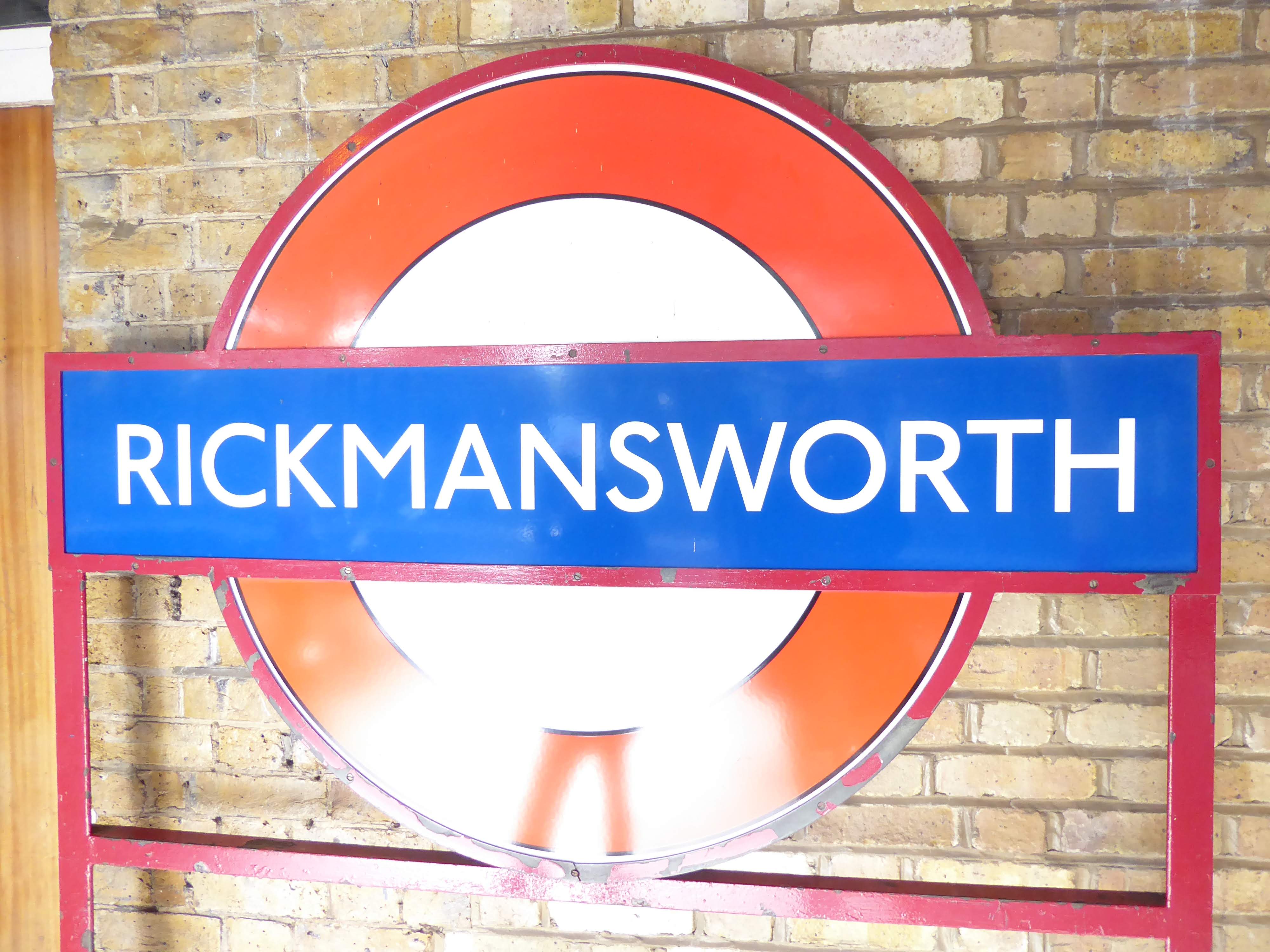
I managed to just about get to the end of the High Street when it started raining again. Luckily there was an overground rail station - still part of the Transport
for London, so I could still use my free travel pass. I was delighted to see that despite the rail strike this line was still running and would get me back into central London.A quick farewell and thank you to L who had shown me all the interesting parts of Watford that make it special. I really enjoyed my visit here as there was so much to see which made a change from previous stations.


 But even in an affluent area like this I noticed that a few of the shops had closed down.